
Ending violence
Discipline is not violence: teach a child with love, not fear
By Idara ya Uchapishaji · DiA's · 19 October 2026 · 1 min read
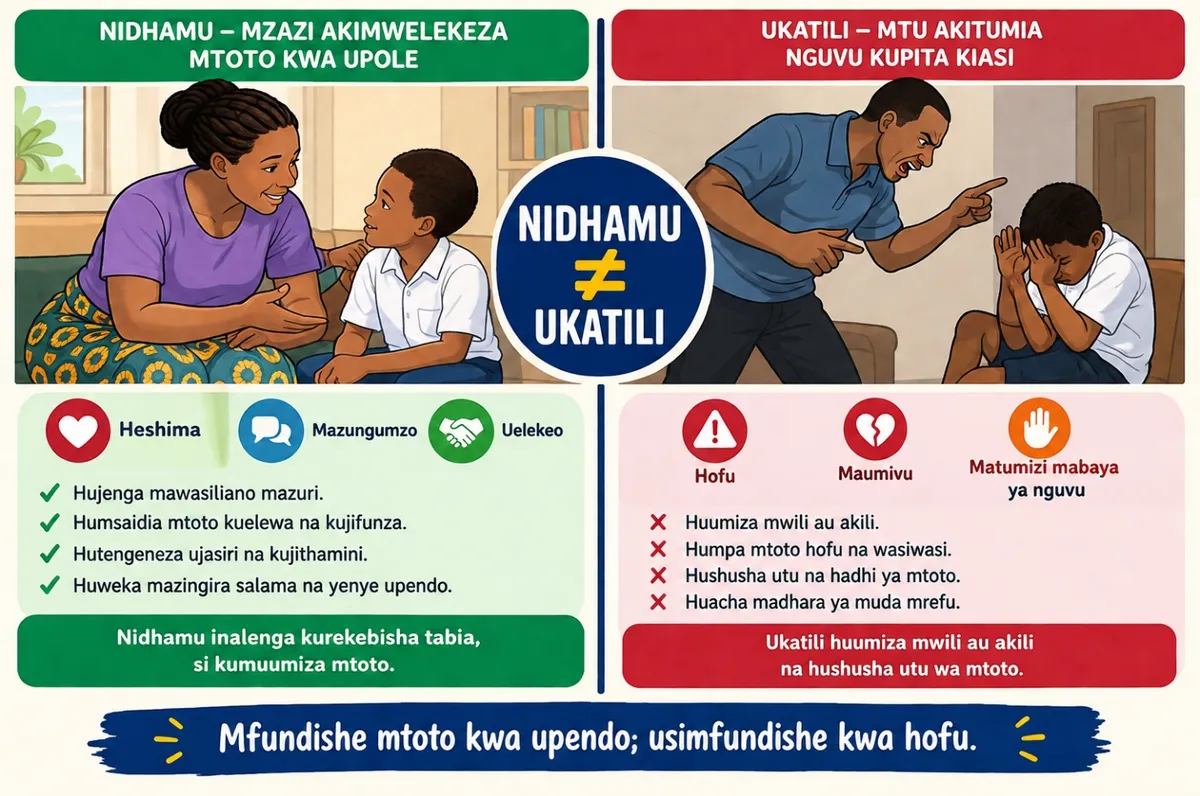
Where is the line between raising a child and hurting them? The Ngao ya Msamaria booklet explains the difference between proper discipline and violence.
Violence is any act done on purpose (or even without knowing its harm) that uses force, authority, influence or threats to cause pain, injury, fear or death to another person. Many people think violence only means fighting, but it is wider: it is the misuse of power against someone who cannot defend themselves.
Two examples
An older brother beating and injuring his younger sibling for being late to open the gate. Or a teacher caning a student in anger until they are injured, in the name of discipline. That is no longer upbringing; it is violence.
The key difference
Proper discipline aims to correct behaviour with love and guidance; violence aims to hurt, punish and instil fear. Discipline leaves no physical or emotional wounds; violence leaves scars. Discipline respects a child's dignity; violence humiliates them in front of others.
For parents and teachers
Before punishing a child, ask yourself: do I want to teach them, or to hurt them? A child taught with love learns confidence; a child taught with fear learns to be afraid, and often repeats that violence as an adult.